If you are interested in an exciting health profession, Respiratory Therapy certainly deserves a close look. The University of Missouri Respiratory Therapy Program was established in 1967. The program is credited to be among the country's first baccalaureate degree programs in Respiratory Therapy. The University of Missouri's Respiratory Therapy program prepares graduates for the Advanced Practitioner level, Registered Respiratory Therapist (RRT) and students graduate with a Bachelor of Health Science in Respiratory Therapy. If you are interested in an exciting health profession, Respiratory Therapy certainly deserves a close look. The University of Missouri Respiratory Therapy Program was established in 1967. The program is credited to be among the country's first baccalaureate degree programs in Respiratory Therapy. The University of Missouri's Respiratory Therapy program prepares graduates for the Advanced Practitioner level, Registered Respiratory Therapist (RRT) and students graduate with a Bachelor of Health Science in Respiratory Therapy.
The Mission of the University of Missouri Respiratory Therapy Program is to coordinate superior classroom, laboratory, and clinical experiences to prepare advanced Respiratory Care Practitioners, develop learners who will effectively engage in professional leadership roles, and provide an environment where research and service are expectations.
The Respiratory Therapy Education program offers a multitude of clinical, administrative, educational and research opportunities. The curriculum was designed not only to expose students to traditional respiratory care as it is applied in the hospital setting, but to include other opportunities in sleep medicine, air transport, pulmonary rehabilitation, asthma education, smoking cessation, service learning and research.
Respiratory Care is one of the fastest growing allied health professions. The U.S. Bureau of Labor Statistics expects a very good job outlook for Respiratory Therapy. Employment opportunities are projected to increase by nearly 35%, the fourth largest projected increase among health diagnosing and treating practitioners. Employment of Respiratory Therapists is expected to increase faster than the average for all occupations through the year 2012. Recent advances in medicine require the respiratory care practitioner to assume greater responsibility in the treatment of adults and infants with cardiopulmonary dysfunction. For more information, visit http://www.aarc.org/career/.
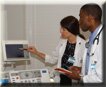
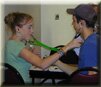
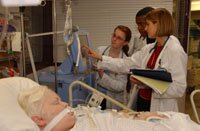 Respiratory Care Practitioners provide prescribed care and life support to patients with cardiopulmonary problems. They assemble, operate and monitor devices such as mechanical ventilators, therapeutic gas administration apparatus, environmental control systems and aerosol generators. For example, they assist patients with breathing exercises and monitor their patients' physiological responses to therapy. Respiratory Care Practitioners provide prescribed care and life support to patients with cardiopulmonary problems. They assemble, operate and monitor devices such as mechanical ventilators, therapeutic gas administration apparatus, environmental control systems and aerosol generators. For example, they assist patients with breathing exercises and monitor their patients' physiological responses to therapy.
Respiratory Care Practitioners exercise a considerable degree of independent clinical judgment in the care of patients under the direct or indirect supervision of a physician. Further, respiratory care practitioners serve as a valuable resource to the physician regarding safe and effective treatment of their patients.
More than 80% of Respiratory Care Practitioners work in hospitals but many also work in home care, physician's offices, research, Health Maintenance Organizations (HMO's) and skilled nursing facilities.
The career potential for respiratory care in most areas is good to excellent and this will continue throughout the 2000's. The Respiratory Therapy (RT) Program graduates are actively recruited and many receive multiple job offers. Upon successful completion of the NBRC Registry Board Exams, Respiratory Care Practitioners can expect an average salary of $42,930 (according to U.S. Department of Labor, Bureau of Labor Statistics, January 20, 2005).
|
|