UNIVERSITY OF MSSOURI-COLUMBIA | SCHOOL OF HEALTH PROFESSONS | MU GRADUATE SCHOOL |



 MUOT Home
Admissions
Courses
Student Info
Financial Aide
Fieldwork
Clinics
Jobs for Grads
Faculty Positions
Neurofeedback study
OT Links
Events
Department of Occupational Therapy
and Occupational Science
OT Fieldwork (Clinicals)
 Fieldwork placements in MU's Department of Occupational Therapy and Occupational Science are an integral part of the student's occupational therapy education and a requirement for graduation, professional certification and state regulatory agencies; e.g. licensing boards.
Level I Fieldwork and other client contact experiences are scheduled concurrently with course work throughout the curriculum. Level I Fieldwork placements are scheduled in clinical and community sites with pediatric, geriatric, adult rehabilitation and mental health populations and with community based services. These Level I Fieldwork placements allow the student to reinforce and test knowledge and skills presented in the classroom.
Level II Fieldwork is composed of two twelve (12) week full-time clinical placements. The placements occur following successful completion of all required academic course work and all Level I Fieldwork assignments. One placement will be in an adult rehabilitation treatment setting and the other may be in a community-based or 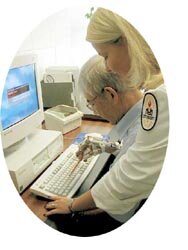 specialized treatment setting.
Upon completion of all fieldwork placements the student will have experience with various groups across the lifespan, various psychosocial and physical performance deficits and various service delivery models reflective of current practice. The student will be performing at the level of an entry level generalist occupational therapist.
Fieldwork Rotation Schedule
Level I Children: 1x/week for 7 weeks Feb. - April
Level I Older Adults: 1x/week for 7 weeks Feb. - April
Level I Mental Health: 3rd or 4th week in March
Level I Clinical: 1x/week for 7 weeks Sept. - Oct.
Level II A January through March
Level II B April through June
Qualification Requirements for Client Contact:
In preparation for client contact during fieldwork and community experiences, documentation of the following records is initiated during the Junior summer semester and updated as needed prior to graduation from the program. Documentation of these records is kept by the student in a Client Contact Compliance Folder and used to demonstrate proof of compliance to the fieldwork office and as requested by fieldwork and community sites. Individual fieldwork and community sites may have additional requirements. Students are responsible for any financial cost incurred to meet these requirements.
-
Immunizations - MMR, diphtheria/tetanus, poliomyelitis, Hepatitis B and Varicella history or titer. Hepatitis A and Influenza are recommended.
-
TB Test
-
Panel 5 drug screen
-
American Heart Association - Basic Life Support for Healthcare Providers
-
Infection Control Training
-
Background Checks:
-
Family Care Safety Registry
-
Office of Inspector General's List of Excluded Individuals
-
General Services Administration's Excluded Parties Lists System
-
A criminal background check for each state of residence since the age of 18 or for the past ten years if over 28 years old.
-
7. HIPAA training
8. Confidentiality Statement
9. Professional Data Packet
10. Medical Insurance required by most sites
11. Liability Insurance Coverage - Provided through the Curators of the University of Missouri professional liability policy.
Students are required to sign a release of information form which allows any concerns regarding the results of a student's criminal background checks or drug screen to be discussed with each fieldwork site prior to the beginning of the student's fieldwork experience, at that site.
___________________________________
The MUOT department is accredited by the Accreditation Council for Occupational Therapy Education (ACOTE) of the American Occupational Therapy Association, 4720 Montgomery Lane , Bethesda , MD , 20814-3425 , (301) 652-2682.
Graduates are eligible to sit for the national certification examination administered by the National Board for Certification in Occupational Therapy Inc., 800 South Frederick, Suite 200 , Gaithersburg , MD 20977-4150 , (301)990-7979. Successful completion of this examination qualifies the graduate as an occupational therapist, registered (OTR). States require licensure to practice, which is based on the results of the NBCOT certification exam.
Please send comments and suggestions to the